
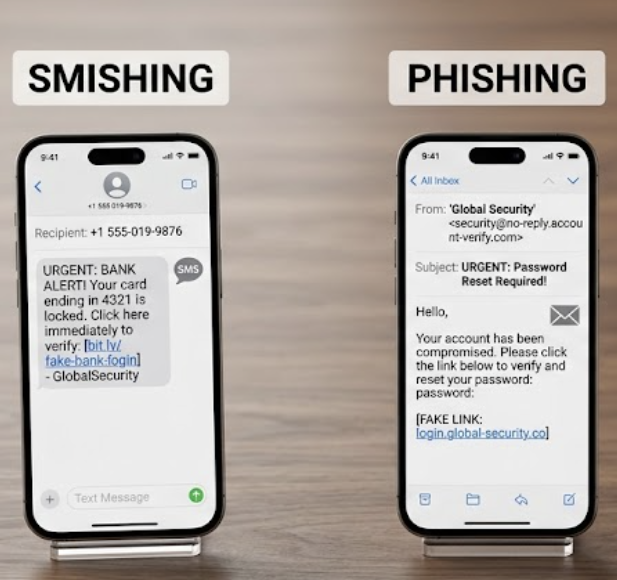
You Need to Know About Smishing, Phishing, and Vishing
Whether it comes through a text, an email, or a direct phone call, the end game is always the same—snatching your cash, passwords, or personal details. Let’s break down the three biggest imposter scams landing in Aussie inboxes and phones every day, and how to spot them before you take the bait.
Smishing (SMS Phishing): The Quick Text Trap Because we’re all glued to our phones and used to getting legitimate delivery updates or appointment reminders, our guard is naturally down when an SMS comes through. Scammers know this. – Who they pretend to be: High-volume services you probably use—Australia Post, DHL, or toll operators like Linkt. – The setup: They’ll claim a parcel is stuck at a depot due to an “incomplete address,” or warn that an unpaid toll is about to incur massive penalties. – The trap: A short, panicky message paired with a link. Tapping it takes you to a cloned website designed to steal your credit card details or login info before you even realize what happened.
Email Phishing: The Old Reliable Email phishing has been around forever, but today’s versions are a far cry from the obvious spam of the early 2000s. Modern phishing emails look remarkably legitimate. – Who they pretend to be: Banks, energy companies, Microsoft 365, or streaming platforms. – The setup: They lean heavily on fear or urgency. You’ll see threats about immediate account suspension, an overdue bill you don’t remember, or a scary “unauthorized login attempt.” –
Vishing (Voice Phishing): The High-Pressure Call Vishing skips the screen entirely and puts a real person on the line. Because it’s a live conversation, scammers can dial up the pressure, gauge your reaction, and change their script on the fly. – Who they pretend to be: Bank fraud teams, the ATO, the police, or your company’s IT desk.
Quick Reference: Spotting the Scam
Smishing – How It Arrives: Text Message – The Trick: Fake delivery or toll warnings – What They’re After: Credit card info, quick clicks
Email Phishing – How It Arrives: Inbox – The Trick: Fake bills, security alerts – What They’re After: Passwords, malware downloads
Vishing – How It Arrives: Phone Call – The Trick: Fraud alerts, tax or IT emergencies – What They’re After: Remote computer access, bank transfers, security codes
Four Ways to Keep Yourself Safe
1. Slow down. Scammers rely on artificial urgency to panic you into acting without thinking.
2. Verify independently. Never use contact numbers or links inside a suspicious message.
3. Use Multi-Factor Authentication (MFA). Pairing strong passwords with multi-factor authentication adds a massive layer of defense.